
Research
We study genetic epilepsies from bench to bedside and back
Epilepsy affects approximately 50 million people worldwide, making it one of the most prevalent neurological disorders. While the causes of epilepsy are diverse, genetic factors are estimated to contribute to approximately 40% of cases. Within our team, we focus particularly on severe forms of epilepsy that begin in early life and are accompanied by developmental delay. Treating these individuals remains especially challenging, as current therapies rarely address the underlying developmental issues. We are convinced that understanding the genetic mechanisms at the root of these disorders is a crucial first step toward developing more effective, targeted treatments.

Gene discovery
The core focus of our research group is to uncover novel genes and genetic mechanisms involved in epilepsy. We leverage a large, well-characterized collection of patient samples and apply advanced multi-omics approaches to investigate the underlying biology. Over the years, our work has contributed to the discovery and characterization of multiple disease entities, with particular emphasis on KCNQ2- and STXBP1-related disorders, which remain central to our research.

Biomarker research
In our team, we explore biomarkers to improve the diagnosis, prognosis, and treatment response prediction in genetic epilepsies. We use advanced omics technologies—including cfDNA profiling —to develop minimally invasive diagnostic tools. In parallel, we investigate EEG-based biomarkers and genetic modifiers to better understand disease variability and stratify patients for future clinical trials. Our goal is to establish robust, clinically meaningful biomarkers that support precision medicine across developmental and epileptic encephalopathies (DEEs).
Disease modelling
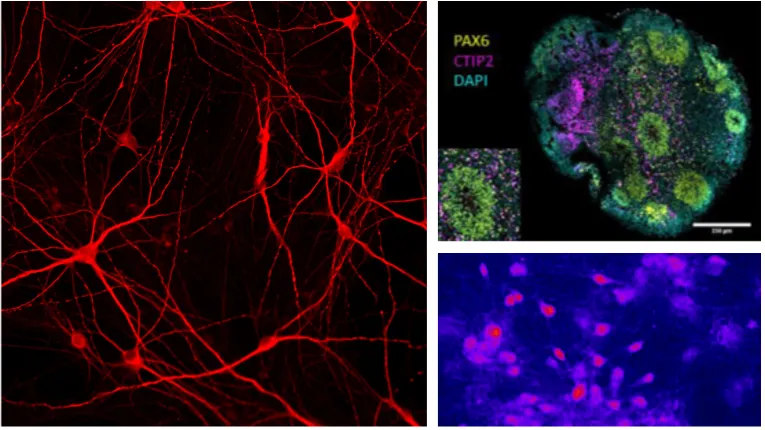
We use iPSC-derived neuronal cultures and brain organoids to investigate the molecular mechanisms underlying genetic epilepsies, with a current focus on KCNQ2-related disorders. By combining detailed electrophysiological, morphological, and transcriptomic analyses, we aim to gain deeper insight into the neurodevelopmental impact of these conditions and to uncover and validate novel therapeutic targets.

Clinical trial readiness
Together with other clinical partners involved in rare disease research, we actively initiate and coordinate patient registries and natural history studies for DEEs, specifically KCNQ2- and STXBP1-related disorders, to lay the groundwork for future clinical trials and support the development of meaningful outcome measures.